Church and Life
Volume LXXIV, Number 4
Happy Autumn!
Church and Life was established in 1952 as Kirke og Folk, a periodical serving the Danish-American Lutheran community, especially those shaped by the Grundtvigian tradition of Danish Christianity. This final issue of Church and Life opens with an article by former editor and faithful contributor Joy Ibsen who remembers "The Four Grundtvigian Principles," as articulated by Walter Capps in a series of lectures in 1992. Capps describes key elements in Grundtvig's vision of what a joyful life journey constitutes. The articles and stories that follow likewise celebrate central tenants of Church and Life, ideas such as community, heritage, family, culture, and tradition. For many readers, like Andrés Albertsen and Marilyn Andersen Gift, gatherings like the annual Folk Meeting in Tyler, Minnesota, and Danish organizations, churches, and colleges and universities represent what it means to be part of a happy, thoughtful, thriving community. The idea of community for Bert Bodaski is intertwined with memories of family and friendship. For others, community arrises with collective heritage in the rich soil of the emigrant experience: Edward Broadbridge relates what he has learned about a life lived in two languages, Joy Ibsen recounts the story of her ancestors' immigration to the United States, and Erik P. Lillehoj tells about his maternal great-great-grandfather, the Danish War Veteran and immigrant Jens Jensen. Beyond heritage, what have Church and Life readers come to value? L.B. Lyons answers this question with memories of her years at Grand View University, where she absorbed the hopeful lessons shared by readers of Church and Life. Through an account of a Christmas past, Barbara Gardner expresses gratitude for the rich traditions and the genuine love and joy that bind her family and community. And Lars Claussen closes the issue with reflections about Danebod 2026 and hopes for the future. Nostalgia, gratitude, and hope are not incompatible. The postscript by Brad Busbee remembers with gratitude the many editors and contributors to Church and Life.
Although this is the final issue, the Danish Interest Conference still needs your support. There are two easy ways to give:
- Click on the “Make a Donation” icon here or when you enter the homepage for Church and Life at churchandlife.com.
- Mail a check (Pay to the order of Church and Life) to:
Andrés Albertsen
1405 19th Ave SE Apt 103
Willmar MN 56201.
A donation of any amount will be tax deductible. Whether you decide to make a gift alone, with a group of friends, with your family, or on behalf of your business or institution, we are happy to work with you. Whatever you decide, your donation will be greatly appreciated.
The Four Grundtvigian Principles, according to Walter Capps
by Joy Ibsen
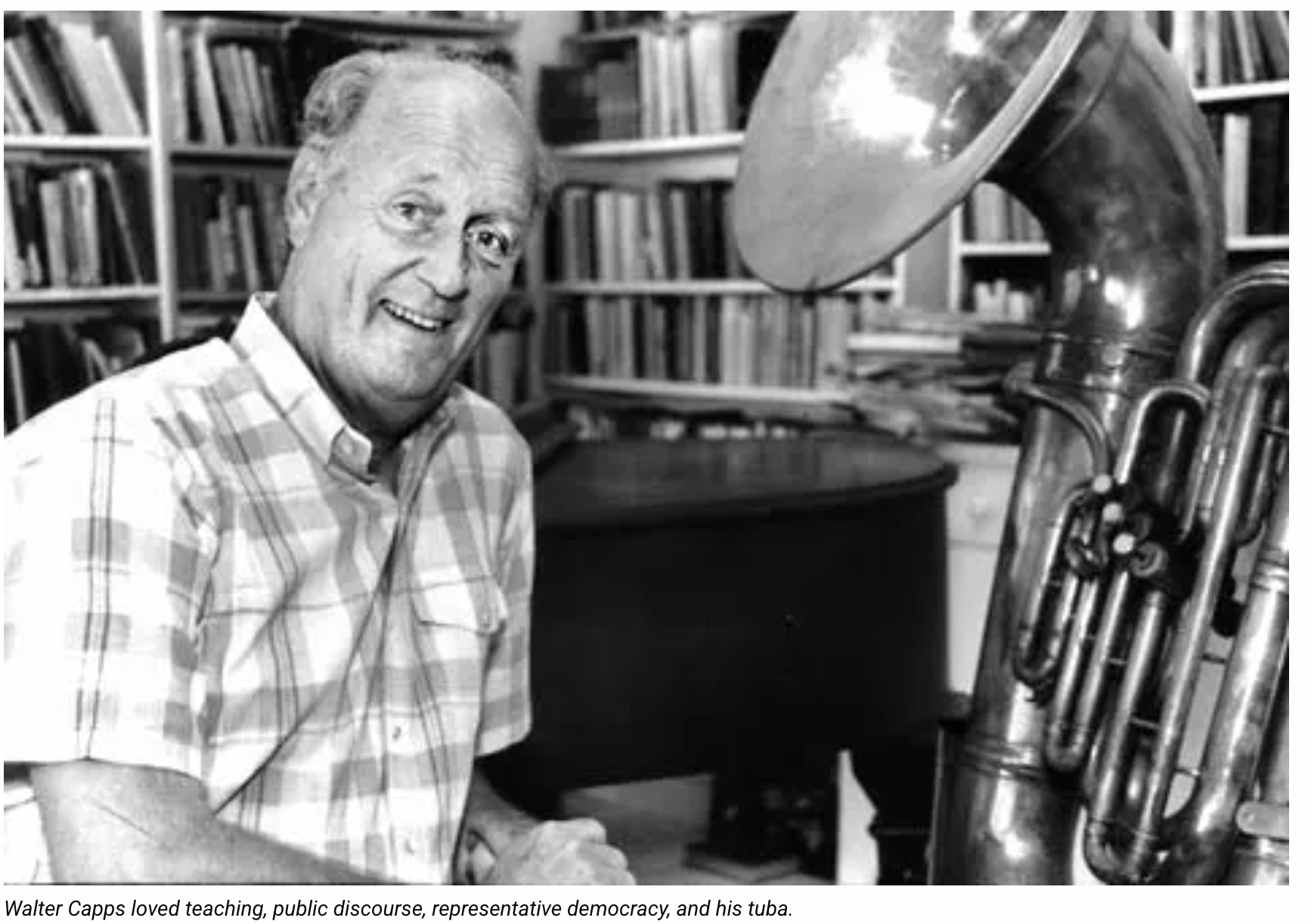
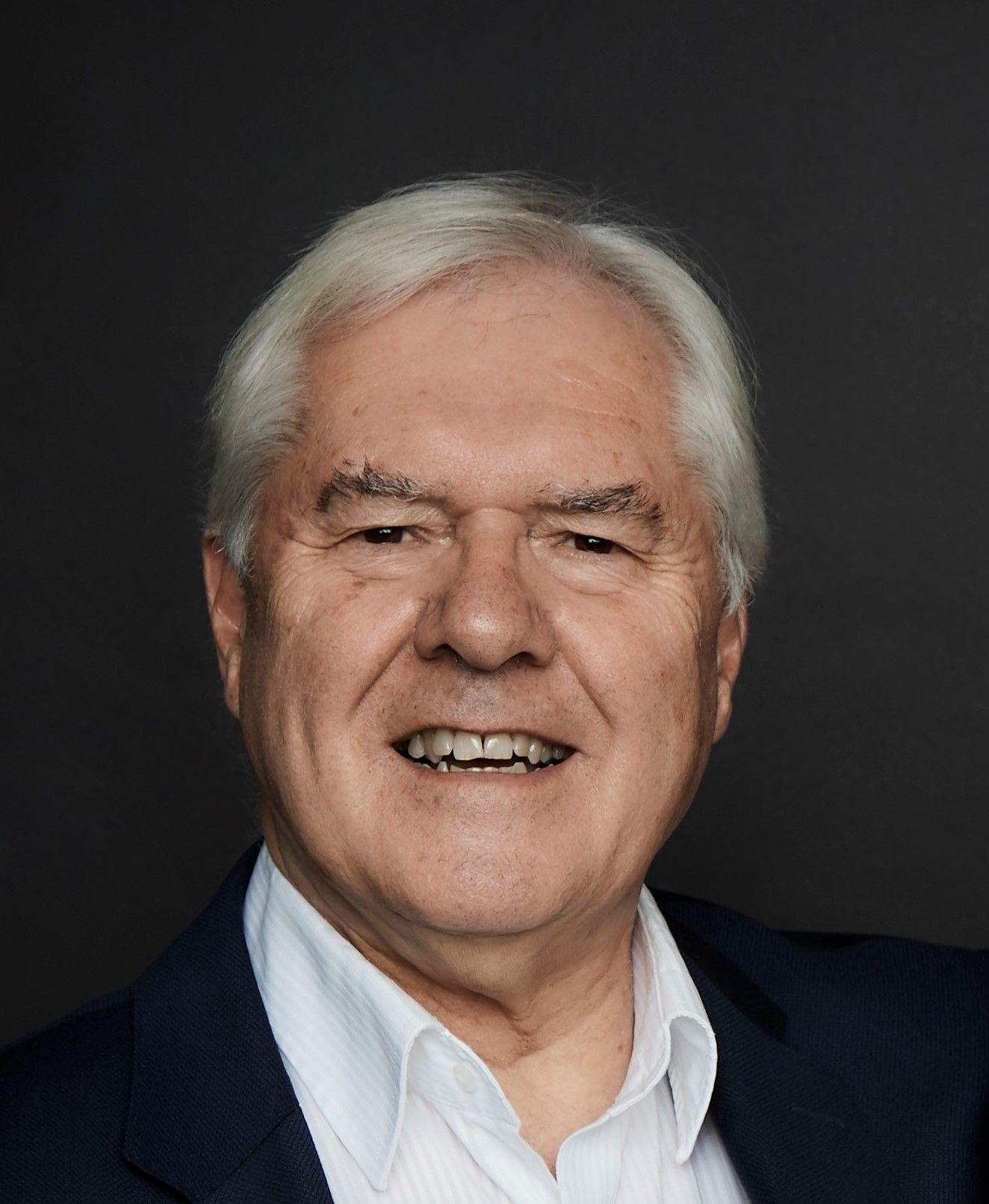
Several Church and Life articles have meant a lot to me. My life was changed by a series of lectures at Danebod Folk Meeting in Tyler, Minnesota, in 1992. That year, Walter Capps (pictured above) delivered a lecture containing the phrase titled "The Four Grundtvigian Principles,” and the phrase has been an everyday handle for me ever since.
Walter Capps (1934-1997) was a professor and theologian at the University of California and a U.S. Congressman. His lecture title at Danebod that year was “The Future of Grundtvigianism"; it was a strange title to me because I grew up in a Grundtvigian household in Danish-American communities and thought I knew a lot about N.F.S. Grundtvig, the influential philosopher, poet, educator, and theologian. Grundtvig represented the foundations of my philosophy and theology, but I always wondered: What did Grundtvig have to do with my future? I gradually learned that Walter Capps and Grundtvig both had a great deal to say about what it means to be a human being and how we might create a better future.
The early nineties were a time when most of us expected a future of ever-increasing improvements, but Capps predicted multiple disasters. He claimed that in the 21st century we would have violence and injustice, environmental catastrophes, more racism, ethnic prejudice, declines in basic education, increased poverty, rampant displacement, and, in general, more suffering. He believed governments throughout the world — be they capitalist, socialist, autocratic, or communist — were failing humanity. Capps contended that the core of the problem was a lack of unity that would make it difficult to meet the critical demands of the future.
But Capps was not without hope. He was looking for answers that were independent of any particular religion. And he found what he was looking for in N.F.S. Grundtvig, a controversial Lutheran clergyman who was committed to freedom of religion and whose mantra was “Human First.” Capps was not of Danish descent, and he became aware of Grundtvig late in life. One day, one of his students asked him, “Isn’t anyone happy?” He took the question seriously and, in a visit to nearby Solvang, California, he met several “ Gundtvigian" Danes. He saw that they were, of course, not without problems, but he discovered that they were nonetheless happy. He learned that, in general, Danish people consistently rank high in the happiness department, have a strong economy and excellent health care, and are well educated about and trusting of their government. Capps developed friendships in the community and began studying Grundtvig's sermons and hymns and his writings about folk schools. From his readings and discussions, Capps identified what he saw as Grundtvig’s four basic principles, ones independent of religion, but relevant and inspirational for well-being and happiness.
Grundtvig’s mantra was "Human First, then Christian.” What does “Human First” mean? It means we begin with what we have in common as human beings. It is a factual statement of the history of the world long before there was religion. Capps understood Grundtvig's idea as stressing the importance of people's awareness of the fullness of earthly life and of the humanity of those around them.
With this baseline concept in mind, Capps identified the following four key principles of Grundtvig's philosophy: 1) affirmation of life, (2) close proximimity to nature, (3) appreciation of the goodness and beauty of ordinary life, and (4) lifelong learning.
I'll take these one by one.
First, affirmation of life:
Life is an adventure! Life is fantastic! We are meant to be here. We should find joy in creation and honor life’s goodness. We should recognize and celebrate the goodness of creation, accept and love the world as it is while realizing the world needs to be transformed. But instead of concentrating on what is wrong with the world, we must help transform it! We must not get lost in a constant fabrication of what should or could be. We human beings are not mechanistic wooden puppets. We are real, live human beings who have free will, and we are accountable for what we do and for the world around us. Enjoying life is not about perfection; rather, it is about living in gratitude, having hope, taking pleasure in what we have, cherishing rather than self-judging. We must live in gratitude and affirm life!
Grundtvig, through Capps, urges us to be thankful we are alive and to embrace reality. This is a world where nearly everyone experiences a broken heart, a world where children are hungry, people are tortured. It is a world where there is deception, lying, cheating, illness, and pain. But it is also a world we can transform by honoring who we are and by following our life purposes. It is a world of incredible beauty, kindness, and caring where there is helpfulness, sweetness, fellowship, and joy. It is a world that we can transform by honoring who we are.
Second, proximity to nature:
We are part of nature. The elements created by star explosions are found in nature and these same elements are also within our bodies. Our earth home is a relative of other planets. Let us take care of our incredibly beautiful home. Let us enjoy the earth! Nature cannot be anything apart from us nor can we be apart from nature. We are dependent on our Mother Gaia, whom we love dearly. We must no longer neglect her.
Nature provides our food and drink. She sustains and upholds us. Sometimes she causes harm and destroys what we have made, but Mother Gaia cannot and will not destroy our souls. She creates much more than she destroys. But she is aging. She has not been treated well. We must care for her and not allow others to abuse her. Without her, we have no life. Mother Gaia is dehydrated, worn out. She has a bad infection, and her respiratory problems are severe. She sometimes needs more oxygen. She needs our help. She has been given too many antibiotics which causes problems with her elimination system.
Occasionally, humans can improve nature, but we did not create nature! We did not lay the cornerstone when the morning stars sang together. We did not create the elements from which new substances are made. The only way to end further destruction is for us to become a more earth-caring, people-caring, animal and vegetation-caring species.
Third, appreciation of the goodness and beauty of ordinary life:
Each one of us is one in a million, and each of us is one in a million. These two truths are one truth! Believe in ordinary people: They are the stability of our world! See them as divine human beings, potential resources. Each normal individual is also extraordinary. Love each and every person. Yes, each and every one.
We once loved people and used things; now, it sometimes seems we love things and use people. Machines and human beings share functional similarities, but people are not machines. Many people strive to be as machinelike as possible, defining their bodies and society in mechanistic terms. They have to remember that we have souls; machines do not.
Each of us has an ego to deal with. Grundtvig referred to ego as the human knot. Knots must be untied, and we must do the untangling ourselves. We are not to unite another person’s knot unless clearly invited to. A key to happiness and fulfillment, then, is finding meaning and in relationships with one another.
Fourth, lifelong learning:
Grundtvig realized that education for life is necessary in order for democracy to survive and thrive. He is founder of the Folk Schools, institutions that put into practice the concept of lifelong learning. Alarmed by the brutality of the French Revolution, he taught society not to view the peasant class as inferior but rather as a people rich with wisdom, talent, abilities, and common sense, a people who — like everyone — need proper education. But what does "education" mean?
To Grundtvig, the word means more than book learning. The purpose of education is not to mold the masses, but rather to challenge, empower, and enlighten ordinary people. Living education for Grundtvig was about the spoken word and discussion. Classes were times of "living interaction” between and among students and teachers. School days included storytelling and singing. Students learned to work together on projects, and they performed everyday chores normal to group living experiences. Grundtvig believed that education is not just about learning to make a living; it is also about learning how to live.
Today, lifelong learning is valued not only by students, but by older people and by all of us!
I am very grateful for these principles, as Capps articulated them.
Memories of Folk Meetings
Andrés Albertsen
I first heard about the Folk Meeting in Tyler, Minnesota, in August 2009. At the time, I was a fellow at the ELCA Churchwide Assembly in Minneapolis, and, by coincidence, I met Bridget Jensen, who would later become editor of Church and Life. I was on sabbatical from my call as pastor of the Danish Lutheran Church in Buenos Aires, Argentina, and I was studying at the Lutheran School of Theology in Chicago. But I had traveled to Minneapolis because I could not miss that assembly, where they would pass a social statement recognizing same-sex partnerships as a legitimate way of life accepted by Lutheran teaching. And perhaps even more consequential, they would hopefully change the ministry policies to give candidates living in same-sex partnerships access to calls as ordained ministers.
I don't remember during which session of the assembly I started a conversation with Bridget. We were both excited about the changes taking place in the ELCA, and we soon discovered that we were both of Danish descent. That was when she told me that she was traveling back and forth to Tyler, where her mother, also named Bridget, was participating in an event called the Folk Meeting. The two Bridgets were from Houston, and Bridget (the daughter) invited me to come and visit. She promised that she would take me to Danevang, a little town in Texas founded by Danish immigrants where her father had his roots and where, as an architect, he had been instrumental in building a Danish Heritage Museum.
I was staying in the United States only until the end of the year, and I didn't think I would have an opportunity to travel to Houston before leaving. What I didn't know was that just a few months after my encounter with Bridget, the Danish Church Abroad, knowing that I was in the United States, was going to contact me and ask if I would be willing, in December of that year, to travel to Houston and lead a Christmas worship service in Danish for the Danish community there. Of course, I said yes. I met Bridget again, along with her mother, and we went to Danevang and participated in a Christmas party at the museum there. I don't remember whether we talked about Tyler. I was going back to Argentina in less than a month and had no idea that I would be coming back.
But in 2010, I was back in Minnesota for a Kierkegaard Conference at St. Olaf College in Northfield. I visited Luther Seminary in St. Paul, where an Argentinean friend was teaching, talked with the International Student Office about scholarships for international doctoral students, and decided that I would begin the application process for the doctoral program as soon as I returned to Argentina.
On August 1, 2011, I was back in Minnesota and ready to start my doctoral program. I didn't think about the Folk Meeting then, and that first month went by quickly as I studied for the entrance exams at the beginning of September. But later that fall, I did some research and found information about the Folk Meeting. I decided to send an email to Ricke Bly, introducing myself, telling her that I would like to participate the following year, and adding that I would be willing to talk about Danish immigration to Argentina.
In my memory, it seems to have taken a while for Ricke to answer. But I just checked, and it was actually on November 18 that I heard back from her. Her response included an invitation to speak as the opening presenter at the 2012 Folk Meeting. Of course, I said yes. And when, a few weeks later, I again went to Houston to lead a Christmas service in Danish and met with the two Bridgets, I could share the news that I would be in Tyler the following year. We agreed to meet there.
I remember requesting assistance with travel to Tyler in August 2012 because I didn't own a car. Ricke Bly put me in contact with Alice and Dan Mikel, who brought me back and forth to Tyler that first time and for several years afterward. Dan was then the president of the Danish Interest Conference (DIC) and, in 2017, he invited me to participate in the DIC meeting held each year during the Folk Meeting. That year, I was elected to become a member of the board.
It is difficult to know how much of my presentation people understood in Tyler in 2012, because my accent must have been much stronger then. At least they could understand the pictures I shared! Bridget Jensen introduced me before the lecture. And that first year, the pastor of the congregation, Jennifer Thul, also invited me to preach at the Sunday worship service at Danebod Lutheran Church.
But I loved the whole Folk Meeting experience, and I loved the people. For many years in Argentina, I had attended a similar gathering, which was held during the Argentinean spring at a Danish-Argentinean boarding school. It went from Wednesday at noon to Sunday evening, and the program resembled the ones at the Tyler Folk Meeting in its combination of singing, lectures, devotions, entertainment, and good food.
Although the Danish-American and Danish-Argentinean communities had grown apart — with some exceptions, of course—we shared many characteristics. (As an aside, I will say that the history of connections between Danish Americans and Danish Argentines is a research project that I hope someone will take up soon.) One thing I noticed early on is that the dry, dark, and slightly weird sense of humor, which is so characteristically Danish, delivered with a straight face could be practiced with the people in Tyler. Usually, they would understand, maybe after a few seconds, that I was not being serious.
And then there were my favorites: the songs.
I love the practice during the Folk Meeting of singing both in Danish and in English. I grew up singing many of the songs with my grandmothers, later at the Danish-Argentinean boarding school where I went to grade school for four years, and later still at the Argentinean version of the Folk Meeting at that same boarding school. At the Folk Meeting I learned new ones, too, of course. Since most of the Danes arrived in America several generations before they began arriving in Argentina in large numbers, many of the melodies were older than the ones I had learned in Argentina. But I have gotten used to them now.
I have not missed a single Folk Meeting since I started attending—not even the ones held online during the pandemic—and I plan to keep coming.
The Peaceful Village and Beyond
by Marilyn Andersen Gift
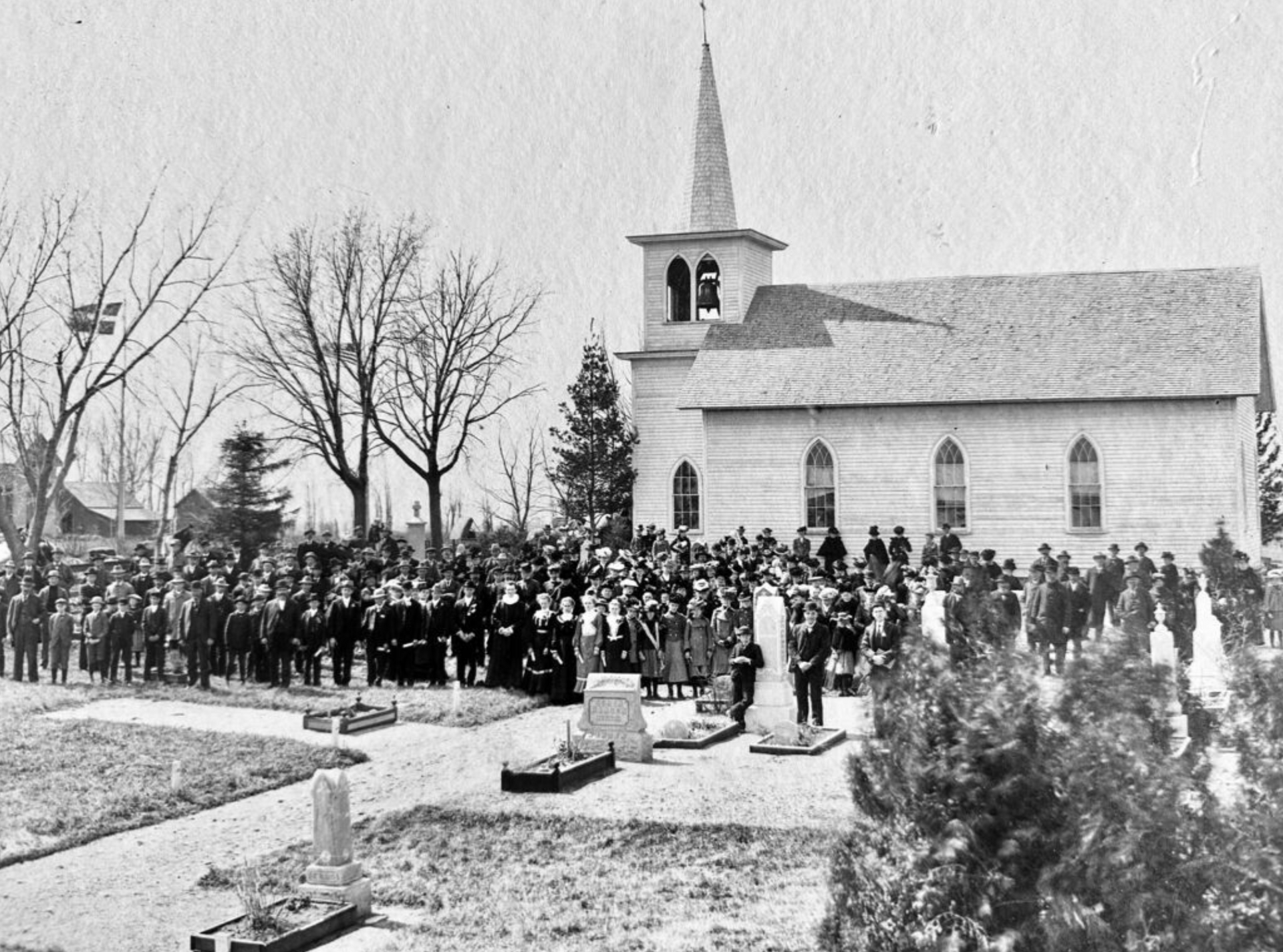
Growing up on a farm, with three older brothers in the Danish Community of Fredsville, Grundy County, Iowa was a blessing. Fredsville means “peaceful village” which it truly was. My parents, grandparents, and most of my cousins attended Fredsville Lutheran Church. Three of my four grandparents were Danish immigrants. Danish was my parents’ first language, and they learned to read and write it fluently despite having only an eighth-grade education. At Fredsville Lutheran Church, Danish traditions were always celebrated, especially at Christmas with dancing around the huge, live Christmas tree in the church auditorium on second Christmas Day. Fredsville Church continues to thrive today in the beautiful Iowa countryside.
The Danish immigrants were proud of their heritage and strived to preserve their heritage for future generations. Education was important to them, and many Grundtvigian folk schools were founded across the country in towns such as Elk Horn, Iowa; West Denmark, Wisconsin; Nysted, Nebraska; Tyler, Minnesota (home of Danebod Folk School); Kenmare, North Dakota; Solvang, California (associated with Atterdag College); and other locations. Dana College in Blair, Nebraska, was founded in 1884. Grand View College (now Grand View University), founded in 1896 is the only remaining college founded by Danish immigrants. It continues to preserve Danish heritage and traditions.
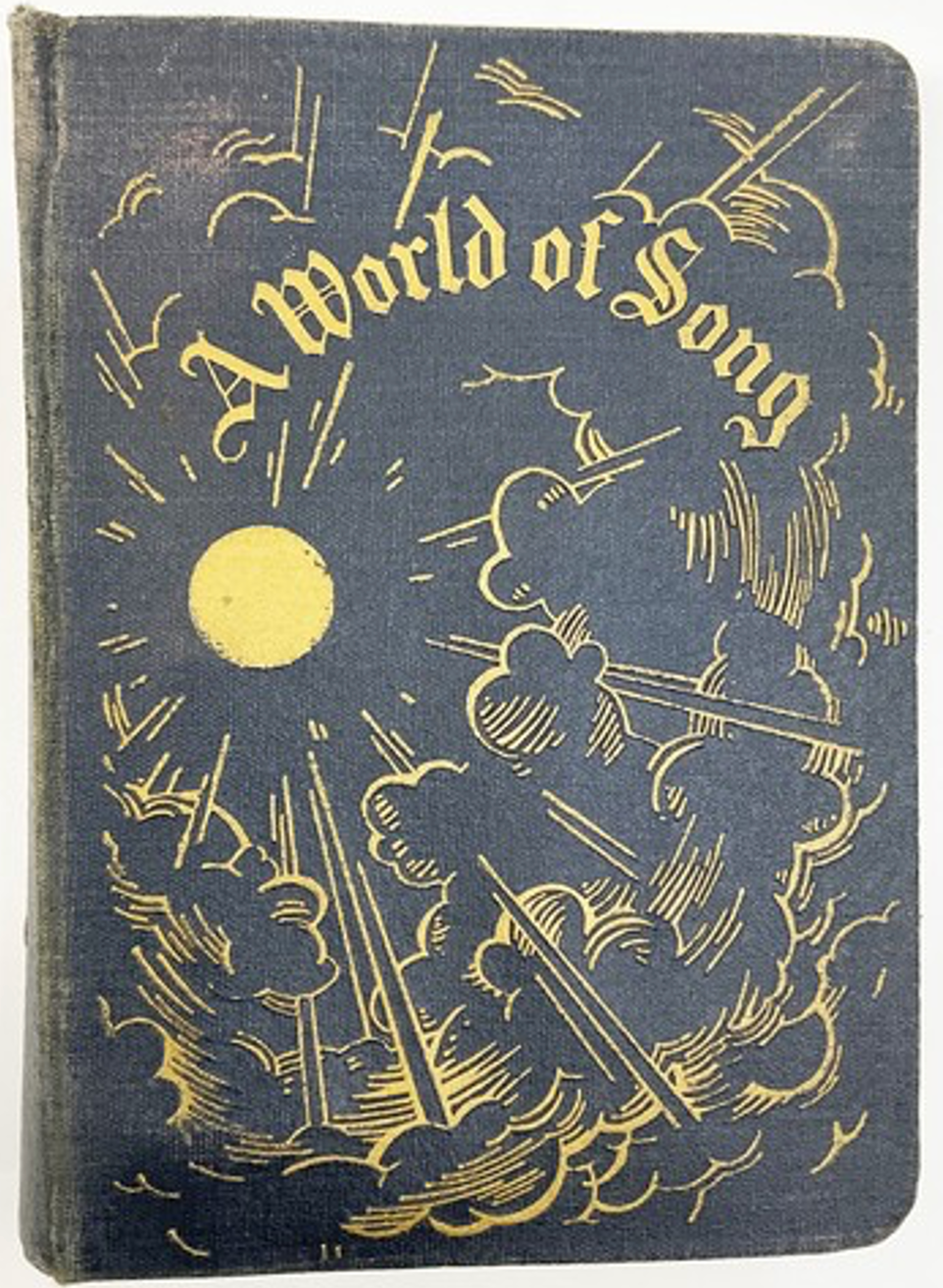
My brothers and I attended Grand View College when it was affiliated with the Danish Evangelical Lutheran Church of America. At that time, students came from Danish communities across the United States. At Grand View, we received an excellent education, shared a common heritage, and formed lifelong friendships. It was an experience that encouraged a sense of community and a sense of belonging, support and identity. Every evening, a seminary student led us in devotions, and then we would sing together from the original blue binder book
The World of Song.
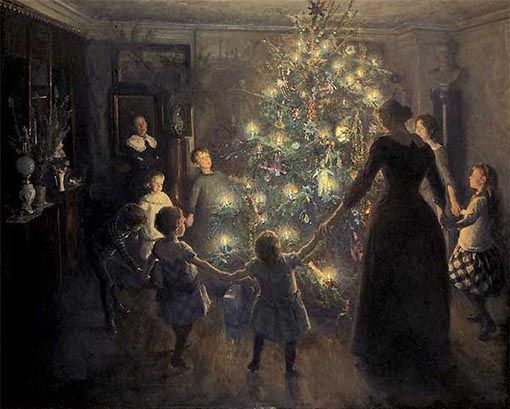
Afterwards, we'd have coffee time in the cafeteria. We also celebrated Christmas by circling the Christmas tree while singing carols.
For over forty years now, our family has continued to extend a similar experience by attending the August Folk Camp (danebodfolkcamp.org) at Tyler, Minnesota. Now, our children and grandchildren attend this intergenerational camp, sing songs together, and enjoy unique Danish heritage and culture.
In addition to heritage and education, the Danes built children’s homes, homes for the elderly and formed organizations such as the Danish Brotherhood and the Danish Sisterhood. We are members of the Danish Brotherhood Lodge #15, one of Des Moines’s long-lived Danish American cultural organizations. A local account dates its charter to November 26, 1884, making it part of the first generation of Danish Brotherhood lodges in the United States. Monthly meetings are held the second Monday of each month at the Lykke Center at Luther Memorial Church. In addition to support for one another, we focus on preserving our Danish heritage and creating opportunities for younger generations. Each year on the first Saturday of November, we host “Det Danske Kolde Bord” (The Danish Cold Table) at the Grand View University Student Center. We offer authentic Danish meal served with adult beverages, set aside a time for sharing, singing together, and hold a silent auction. Proceeds benefit Danish Brotherhood student scholarships. We also support our Danish organizations and local charities by hosting æbleskiver brunches twice a year.
My parents received Kirke and Folk, and we subscribed to Church and Life, a unique publication that kept us connected to the larger Grundtvigian Danish community around the country. Hopefully, new technologies and ways of communication will continue to connect us with one another to share our Christianity, unique Danish heritage, and our values and culture.
My Friend AC Nielsen
by Pastor Bert Bodaski
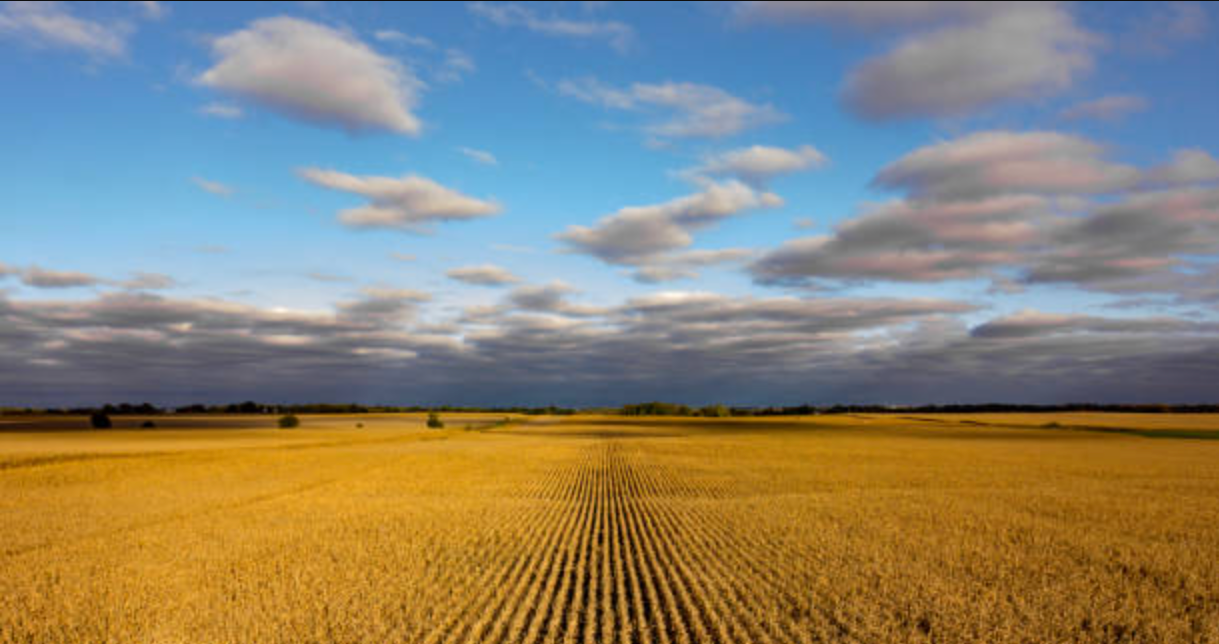
My mother, Gunver Johansen Bodaski, told me about AC Nielsen when I was growing up in Tyler, Minnesota. She told me he was full of fun. AC had been a staple in the Danish Evangelical Lutheran Church, and subsequently the American Evangelical Lutheran Church, serving on church boards and at Grand View College (now University). AC taught in various places in Iowa, such as Fort Dodge. He was a strong believer in Grundtvig’s philosophy and theology.
When I was a boy, AC’s brother Chris Nielsen and his spouse (Gudrun) Guk were caretakers of the Danebod Folk School. My mother was suffering from Periarteritis (now known as Polyarteritis Nodosa) so we moved back to Tyler. To relieve the stress from my grandparents, Tante Guk and Onkel Chris brought my mother, dad, sister, and me into their home at 109 Highland Court. My sister and I were small at the time and tended to be disruptive in a dire but hopeful healing environment. Eventually, by God's grace, my mother recovered.
When AC came to visit his brother Chris in Tyler, I hadn’t yet met him. He had recently returned from France, and he was full of French stories, especially about the French can-can girls. Now AC could tell a good story. It was a fun family gathering at Onkel Chris and Tante Guk’s folk school living room. When my mother and I left, we went to my grandparents’ home, but we still enjoyed our encounters with AC. Once, my Mother disguised her voice with an accent and called Chris and Guk’s phone. When Tante Guk answered, my mother said, ”A person to person call to AC Nielsen from the little French chorus girl on the left.” When AC said, "Hello?" she hung up. In those days Tyler didn’t have dial phones. One operator, Nellie Magandy, was at the switch board. Nellie was known as great source of information as she enjoyed talking with everyone. This came in handy. For example, when people could not reach one of doctors, Nellie knew where they were. When AC called Nellie to find out who placed the person-to-person call from France, there had been no long distance calls, and she couldn’t remember who phoned the Nielsen residence. Mother got away with her joke.
One other time, Uncle Chris was farming on the flat land of central Nebraska where there is no such thing as a stone for many miles. AC found a large stone in Des Moines and took it when he went to visit his bother Chris. He put it in the middle of Onkel Chris’s field. When Chris found the stone, he was confounded. Did it fall from outer space? Did it somehow work its way up from an ancient geological phenomena? It was a good laugh for my family.
Some years later, I enrolled at what is now Grand View University. Onkel Chris and Tante Guk had retired to Des Moines to live with AC. As a Grand View student, I spent many hours with them, eating, playing cards, going to movies. Sometimes AC’s daughter Helen Jessen, her husband Marvin, and their children Carol and David would be part of our get-togethers. My second cousin Erik Hansen also enrolled in Grand View, so he, too, was often part of the get-togethers. We were a family for as long as time allowed.
After Tante Guk and Onkel Chris moved back to Tyler, I moved on to Drake University. AC and I would get together for a meal, attend the theater, or symphony concerts offered in Des Moines. When I went to seminary in Maywood and Chicago to learn from Johannes Knudsen and an outstanding faculty, I would come back to Des Moines to visit. AC had moved to a Presbyterian tower for the elderly on Ingersoll Avenue. Now it was my turn to sleep on the floor, and I gladly did to have time with AC. I saw AC for the last time when I took my fiancé, Susan, soon to be my spouse, to meet him at the dining hall at what became Luther Park as we traveled through Des Moines.
AC Nielsen was a gift to humankind, to the Lutheran Church, and Grand View University. How fortunate my family and I were to know this man! God bless his legacy, may it live on. May AC dwell among God’s saints around God’s throne of grace.
DATELINE DENMARK
By Edward Broadbridge
There is a riveting moment in the 1971 film The Emigrants when, after westering for mile after mile across America, the poor Swede Karl Oskar (Max von Sydow), finally plants his axe in a tree and tells his family, “Here!”
As an emigrant myself – from London to Randers, Denmark, in 1967 – I recognize this heartfelt moment when the emigrant turns immigrant once and for all. I married Hanna that year and much later, in 2013, we hosted Joy Ibsen, the former editor of Church and Life, as she toured Denmark recording interviews on Grundtvig’s influence today. We struck up such a friendship with Joy that Hanna offered to write articles for the journal with news and opinions from Denmark. For years readers enjoyed Hanna’s byline, until she died in 2021. I offered to continue the series, so for four years now I’ve been writing "Dateline Denmark." Sadly this is my last contribution, so I thought I would briefly reflect on the immigrant experience.
Let me start with Grundtvig’s son, Frederik, who married a Swede and emigrated to the United States in 1881. His mission was to preach to the Danes from his pulpit in Clinton, Iowa, as well as from local platforms about the preservation of the Danish national identity as Lutheran Christians and Danish-speakers. His initial success culminated in the founding of Dansk Folkesamfund (Danish Folk Society) in 1887 and the publication in 1889 of the popular Sangbog for det danske Folk i Amerika (Songbook for the Danish People in America). But as the Danes became increasingly Americanised, he realized that he was fighting a losing battle. He returned, disillusioned, to Denmark in 1900 and died three years later.
In my own case, Hanna was a fluent English speaker, so all life through our mutual language was English. Our two daughters are bi-lingual: Lisa emigrated to England in 1989, and Helena travelled the world before settling in Copenhagen in 2019. They treasure their Danish identity, but move around in an English-speaking world.
Most immigrants dream of a better life elsewhere. I am a first generation immigrant who moved country for two other reasons: love of a Danish woman and the chance to use my English teaching skills abroad. I have dual nationality, but my humble view is that Danes are either born in Denmark or born abroad of Danish parents. The Danes are one big clan that you can marry into but you can’t claim that you have thereby become a ‘Dane’. I find myself thinking in Danish but still dreaming in English, mostly about having to teach English to a high school class in Denmark without knowing who the students are, where the classroom is, and what I am supposed to be teaching them five minutes from NOW – then I wake up.
Last year, I met a Danish woman, Kirsten Paarup and fell in love with her. We have moved in together and speak Danish – a huge transition for me, since my brain is still hard-wired to English, however well I have managed in Danish society, learning the culture and the mentality. My last article in June on the high level of Trust in Denmark is what I would like readers to think of their old country, however many generations ago it was that their forefathers set sail for the USA.
In Due Time: Mads and Margrethe Ibsen’s Emmigration to the United States
by Joy Ibsen
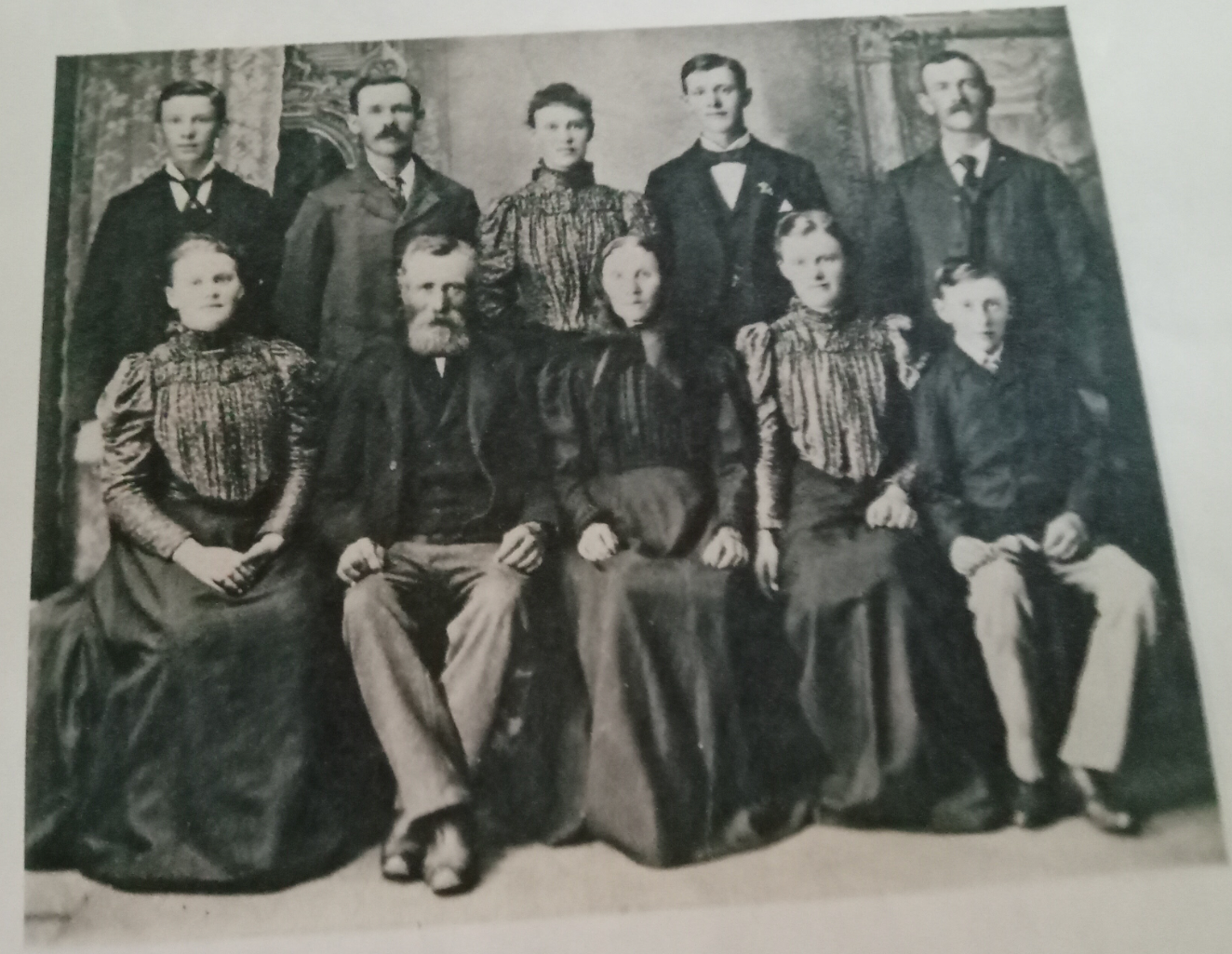
The following story of Mads and Margrete Ibsen's immigration to the United States comes from a manuscript by Einar Petersen who married Ingeborg Ibsen, one of Mads's and Margrete's eight children. Ingeborg was brought to a dugout cave, the primitive shelter where Mads and three of his sons lived temporarily. It was located twelve miles northwest of Viborg, South Dakota. This story is from a larger manuscript translated from Danish by Johannes Knudsen and distributed to the couple's descendants in 1974.
An excerpt from an article in Vendssyssel Tidende (a Danish Newspaper), dated June 12, 1889:
The owner of the farm Rammelhoj in Hormested went to Hjoring last Saturday to try to raise money necessary for his economy. The effort failed, and the man did not come home. Only the day before yesterday, according to Frederkshavn Avis, did a letter come from Copenhagen stating that he was on the way to America. This person is commonly known as an exceptionally honest man who surely has not gone away to evade his financial obligations but rather in order to be able to meet them in due time.
-- Vilhl Carlsen (a personal friend of Mads Ibsen)
Here is what had happened:
Bound by financial obligations, Mads Ibsen, owner of the farm Rammelhoj, had left for America without warning. A few days later, his wife and family received a letter telling them the news. The family was about to lose their farm, but Mads knew his wife and children would be okay while he was gone. He could think of no other recourse, and he had boarded a ship pledging somehow to find work, pay off his debts, and return to his wife and eight children.
In June of 1899, Mads Ibsen arrived in Philadelphia. He was a complete stranger and did not speak English. He became hungry, and he had to pawn a watch given to him by his wife to get a few dollars for food. After a few months, he was able buy it back. He walked around looking for work and finally got a job taking care of cows on a farm near the city. He met some men from Bornholm, and they helped him learn to speak a little English. The daughter of the farm where he worked also helped him learn some English. Then Mads found out that his nephew Anders Ibsen was living in Danneville, South Dakota (now Viborg). Possibilities were better there, so Mads went to Viborg, where many Danes had settled and were doing odd jobs like cobble stoning. In March 1989, Mads' three sons, Lars, Janus, and Villads, met their father at Anders Ibsen's home. They were looking for jobs to pay for food and shelter and to pay off debts.
Eventually, they found jobs working for the Milwaukee Railroad in Sioux Falls, which had two main railroads and new streets. The contract was for the fall and winter for $1.25 a day, and thirty days' work was required before they would be paid. But when the first month was up, the contractor was broke and couldn't pay. Thirty days of work were wasted. They could not remain at the boarding house where they were living so they rented two small rooms over a store. They slept on bundles of straw and shared a few blankets. Three of them went to work while Villads prepared their food, which consisting of porridge, eggs, bread, butter, and herring. Sleep was difficult: Bed bugs, enormous mosquitoes, and a terrible heat kept them up nights. Then, as bad luck would have it, the second pay day was like the first. Thirty more days were wasted. It was an enormous disappointment for the industrious but poverty-stricken workers. They were literally without a cent. They could not keep their rented rooms and bitter need set in.
One Sunday, they walked out of town miles across the prairie to find a place for Villads, who was only fifteen and could not stand the consuming hard labor. The trip was a failure. The next Sunday they again walked from morning until evening. They happened upon a colony of Norwegians eight miles from Sioux Falls. A friendly old Norwegian promised to take care of Villads. He could not hire him himself, but he knew of another family four miles farther north who needed help with cattle, and here Villads could earn room and board. When this was agreed, the kind Norwegian invited them for supper. He probably saw that they needed it. In the morning, they had shared one roll. In the evening they separated. Villads stayed with the Norwegian, while Janus and his father went back to the city. Lars had gotten a job in a sandpit for seventy-five cents a day plus board. A few days later, Villads began his job as a cow-herder. His boss was a middle-aged pioneer who had dug a hole in the ground for a home.
The agreement was that Villads was to have $8.00 a month and free lodging. The family was so poor that, in the end, they could not pay, but Villads was in good hands, and the people were nice. He was given a horse and a dog, and he lived in the great outdoors on the prairie by the banks of the Sioux River. Trees and bushes grew along the banks. The river itself was a wide stream, and Villads learned to swim like a fish. Several months passed. When haying was over, Lars and Janus got jobs on farms where they earned $20 a month. During the fall and winter, they had steady work on the Milwaukee Railroad at $1.25 a day. Villads got a great satisfaction out of the fact that he, a teenager, earned as much as many adults. He also had gained the satisfaction that he was no longer a burden. Villads boss was a Dane, and he was easy on the young laborer. Mads Ibsen had a job in Sioux Falls in a hardware store, below the rooms they once had rented. He assembled and polished stoves.
Toward the end of 1890, the railroad work was over, and they went to Viborg to work in the cornfields.
During the Winter of 1891 and '92, Mads was in the Spring Valley area. In Danneville (Viborg) there were now about fifty families. Most of them were Danes who immigrated in the late 1870s or early '80s. They came from the east in covered wagons pulled by oxen, and they settled whereever they could homestead. The settlers had only to select an unclaimed plot of ground, usually 160 acres. If the person built a log-cabin on the land, dug a well and cultivated five acres a year, he could get a deed for the farm upon the payment of $200.00. If he waited five years, he had no payment to make.
Mads first rented a large acreage where he would pay one third of the harvest as payment, but there were problems regarding the agreement. As a result, Mads again found himself homeless. A neighboring farmer, named Hans Lojtved had a steep bank on his farm with a cave which could give shelter. One winter day, Mads arrived with a pick, shovel, and spade. Now, the land itself was to provide hope and give shelter to a man far from home, a man who could not afford to find shelter above the earth. As he worked, Mads was hearing his children's voices call to him. What was it they had sung in the assemblies in Denmark?
The bird has a nest, the fox has a hole,
The snail carries his house on his back.
The wandering man has but a bag and a staff;
He searches for bed and good luck.
The verse described the life that was his. Verses otherwise hidden away and forgotten reappear when they are needed.
Once the cave was finished, it was furnished with a bed, a table, and a bench. Mads lived there the winter 1892-93. Mads, Villads, and Fredrik Menhold, a young man from Mygdal shared the cave. It was there they celebrated Christmas. They helped each other with the cooking. They may have played cards. They sang Christmas hymns. There was song and dance. It was so festive that even a visiting nimble Methodist shoemaker once forgot himself and waltzed around on the floor of the cave with Mads. When the dance was over the shoemaker could tell by the looks of people that something unusual had taken place. Then it dawned upon him that he was a “holy” man who was not supposed to dance! He disappeared like a whirlwind and hurried home.
Memories find their own paths and so do the Christmas angels. Passersby must have seen the light in the cave and joined in the festivities. The four Danes probably had a better Christmas in their miserable surroundings than many Americans who eat a big meal and forget about the meaning of Christmas soon after.
When that winter had ended, Mads Ibsen went to Spring Valley, which lies fifteen to twenty miles northwest of Viborg. A few Danish farmers from Vendsyssel lived there. They were Baptists and had differences with Mads Ibsen, but they welcomed him as a guest because he sang with them and read to them. They told him about a farm which was not in use. The owner had homesteaded but not fulfilled his obligations and had lost his rights. He would not give up the land for free; he consented to have Mads Ibsen purchase it for $500, paid in installments. Several of Mads’ children helped him make the last payments. The farm was 160 acres of unplowed prairie with a small stream on one corner. It sat on the border of Fremont to the northwest and Hurley to the northeast, each town twelve to fifteen miles away.
Mads dug a suitable cellar in the early spring. Over this he placed a wooden eight by twelve foot shack with a slanting roof. Two beds, one large and one small, were placed there, for two of Mads' daughters, Grethe and Ingeborg who came to America in April 1893. Ingeborg, who was fourteen, moved into the cottage as housekeeper for her father. An old stove that Mads had found on the field served as a kitchen. A table and two chairs completed the furniture. The cottage was not much of a shelter in the heat of summer or the cold of winter, but humans usually prefer to live above the ground rather than in the ground, so they were satisfied enough. Mads divided time between work on his own farm and work on others. As was customary, he plowed a field and planted corn. The price of corn was so low that the farmers hauled the large golden ears together in piles on the field for storage rather than selling for. Some was used for fodder and some as fuel. Little Ingeborg thought that it was a shame to burn the bountiful ears but it just didn't pay to sell the corn. Mads once sold corn for 1/10 cent a pound. The piles of corn on the fields attracted jack rabbits who came up by the dozens for a free meal.
Mads started out with two horses, a cow, few chickens, and a huge black dog called "Trofast," which was a great comfort to little Ingeborg. He dug a barn and a henhouse out of a hillside. Many Indians passed their way to trade; they spoke many languages, and it was not easy for a thirteen-year-old girl who had just come from Denmark to give information. Once an Indian tribe passed the farm firing arrows and guns and making a great deal of noise, but they went by without causing any harm.
When Ingeborg became lonesome, she took her songbook into God's great garden, the prairie, and sang about her longings and her good fortune. The dark shadows over her childhood home were gone. Here in the west, her good father was founding a new home, and back in the old country her mother was adding coin to coin so that she could join them soon. The lonesomeness and quiet of the prairie inspired her thoughts. Sometimes she sang a familiar song with deep sadness:
O land, where I am born, where I belong,
Where my roots are and where my world starts,
Where the language in the soft voice of my other
And reaches my heart like fine music. H.C. Andersen.
By this time, Mads's children also had jobs and took turns coming home to help their father on the farm. After Christmas time, 1895, Mads's longing became very strong. His wife’s mother was dead. There was no reason why Margrethe could not come to America with the youngest children, Ida and Jens. Villads quickly gave his father enough money for the ticket and to pay off the remainder of his debt in Denmark, and pleaded with him to go, and so he did.
The reunion of man and wife and the two small children still in Denmark was a profound joy. The few remaining creditors were paid off. Mads visited his beloved evergreens which he had planted himself years before, and he was pleased to see how they had grown. He gathered seeds from evergreen and beech trees in his pocket and, later, he seeded the in Spring Valley. Mads lived to see them grow. He stayed for two months, and once again he crossed the Atlantic, now with wife and two children in tow.
After seven years of separation, the family was again united. Many things had been tested and much had been lost, but above the burdensome, sad reality of financial difficulties and hard physical labor under conditions of poverty, two stars lighted the darkness: honesty and loyalty. These heavenly stars were never, praise be to God, extinguished for the Mads Ibsen family. May they always be guiding stars for the many young people that have been added to the family.
In the spring of 1900, the farm was sold for $3,000, not counting the livestock. Mads Ibsen now had more cash than ever before. The family moved to Viborg and rented a house for a while. In the fall, they bought a small farm of twenty acres just south of Viborg. The soil was excellent, and the buildings were good; the married children were close by and the church was not far.
Mads Ibsen’s good friend, Vilhl Carlsen, the editor of Vensyssel Tidende, wrote the following on Tuesday, February 26, 1901:
Vensyssle Tidende reported some time ago that a good countryman some years ago had been forced by financial difficulties to emigrate to America. He again and again sent money to Denmark so that no one would suffer a loss through him. This industrious and conscientious man was Mads Ibsen. Spurred by a never-failing willpower, he worked faithfully until his death, and his family gained respect in their new home. At the same time, his name shall be honored at home, for the man who bore the name endured to the last to do his duty, despite sorrow, sickness, poverty, and adversity, which seemed to place greater burdens upon him, more than one man could carry. Such a life work has probably greater worth than many a momentary sensation which is praised to the skies.
Jens Jensen. Danish War Veteran, North American Immigrant
by Erik Lillehoj
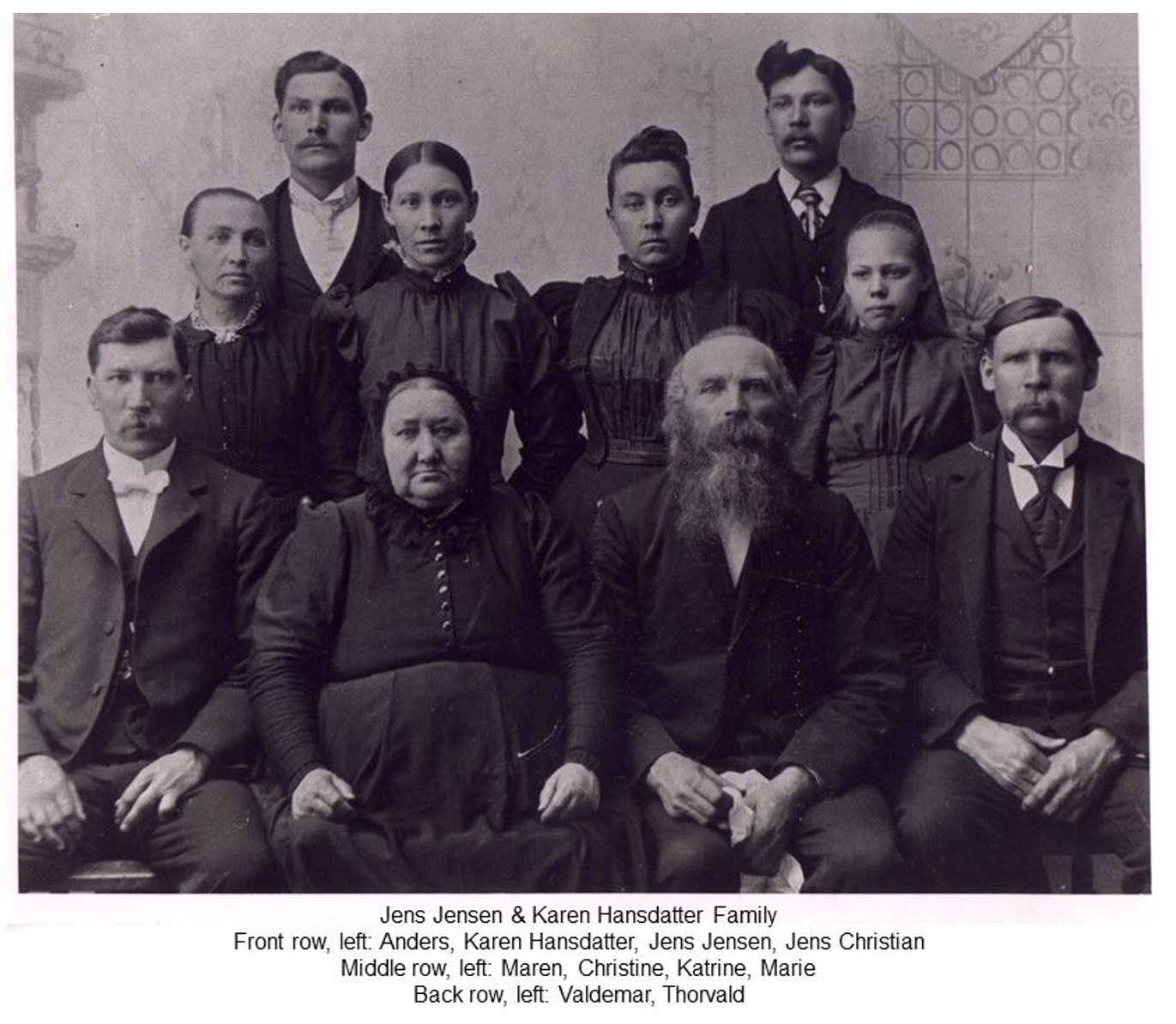
Jens Jensen, my maternal great-great-grandfather, was born on February 15, 1836, in Jordløse Parish, Svendborg County, Denmark, on the island of Fyn as the son of Jens Hansen Palle (1783-1850) and Maren Andersdatter (1788-1842). Jens’s father was a shoemaker who leased a small cottage located at Trunderup matr. 8b, present-day Trunderupvej 71. Jens was the youngest of nine children. His mother died when he was eight years old, and his father died when he was fourteen. Consequently, Jens was raised by sisters, and as a boy he was apprenticed to a cabinetmaker, a trade he followed as an adult. Jens married Karen Hansdatter (1834-1908) on April 14, 1860, in the Jordløse Parish Church. Karen was born on January 30, 1834, in Sandholts Lyndelse Parish, Svendborg County, Denmark. She was the daughter of Hans Christian Madsen (b. 1788) and Gjertrud Hansdatter (b. 1796). Karen married beneath her since Jens was the son of a lower-class cottager (husmand) while Karen was the daughter of a higher-class landowner (gårdmand).
In 1864, Jens was called for military service during the Second Schleswig War between Denmark and a coalition of Prussian and Austrian forces. During the Battle of Dybbøl on April 7-18, 1864, Jens and a comrade were sent out at night to repair trenches. While they were working, the Prussians broke from their trenches, shouting and rushing toward the Danes. “Shall we run?” asked Jens’s comrade. ”If we do, we’ll be shot,” Jens answered. So they were taken prisoners.
Jens was taken first to Germany and later to Austria where he was thrown into a dungeon for seven months while Prussia/Austria negotiated a peace treaty with Denmark. During his imprisonment, Jens wrote letters home, but they were never delivered. A neighbor told Karen that he had not seen Jens since the fight at Dybbøl and did not know what happened to him. She waited for many weeks, and when Jens still did not come home, she finally decided to visit another one of his comrades and inquire as to her husband’s fate. She walked from their cottage in the south of Fyn to a village north of Odense to see him. When she arrived at her destination, she asked a man standing outside a barn as to Jens’s whereabouts. As the man went into the barn to ask another former soldier, Karen stood behind the barn door to listen. She heard the second man in the barn say, “Oh, he is gone!" Upon hearing these words, Karen put her head against the barn and cried uncontrollably; then she returned home.
Meanwhile, following the Treaty of Vienna on October 30, 1864, Jens was released from prison and told to go home. He walked from Austria through Germany and across southern Jutland, a distance of roughly 800 miles, finally returning to Trunderup after one and a half years of absense. One day, a young boy came running and told Karen, “Jens is coming down the road.” She shushed him and said he must not say such things. But she went to the door and looked, and it was indeed Jens!
Following the Schleswig War, Jens continued to work as a cabinetmaker, but his absence had caused a family debt which he and Karen realized they could never repay. They agreed that Jens should go to America and earn money to bring Karen and their children to the United States, which he did in July 1872. Jens worked as a farmhand near Marshalltown, Iowa, and in a Chicago lumberyard, eventually saving enough money to send back home for his family to join him in America in May 1873.
The family initially settled in Manitowoc, Wisconsin, where Jens worked in a furniture factory. Later, he bought twenty-four acres of forested land in New Denmark Township, Brown County, Wisconsin, located about twenty miles northwest of Manitowoc. Here, he cleared the trees and built a log house. The Jensen family lived on their new homestead for eight years. But by 1884, Jens had decided that New Denmark was not the place to bring up his children. He had started a Sunday school there, but the local community showed no interest in sending their children to his school. On the advice of their oldest son, Jens Christian, who was attending the Danish Folk School in Elk Horn, Iowa, the Jensen family moved to southwest Iowa. They purchased eighty acres of farmland located on the old Ridge Road, a mile and a half east of Kimballton where a sod house was built. At that time, everything north of the Ridge Road was undisturbed, open prairie. Jens and Karen Jensen lived in the Kimballton vicinity the rest of their lives. Karen suffered from diabetes and died in 1908. Jens died in 1928, shortly before his 92nd birthday, and both were buried in the Elk Horn Lutheran Cemetery.
This memorial was adapted from: Ulla Nyborg, Årsskrift 2015, Jordløse-Trunderup Lokalhistoriske Arkiv, pp. 21-22.
https://jordlosetrunderuparkiv.dk/wp-content/uploads/2016/04/Årsskrift2015.pdf
What Takes Root Remains
by
L.B. Lyons
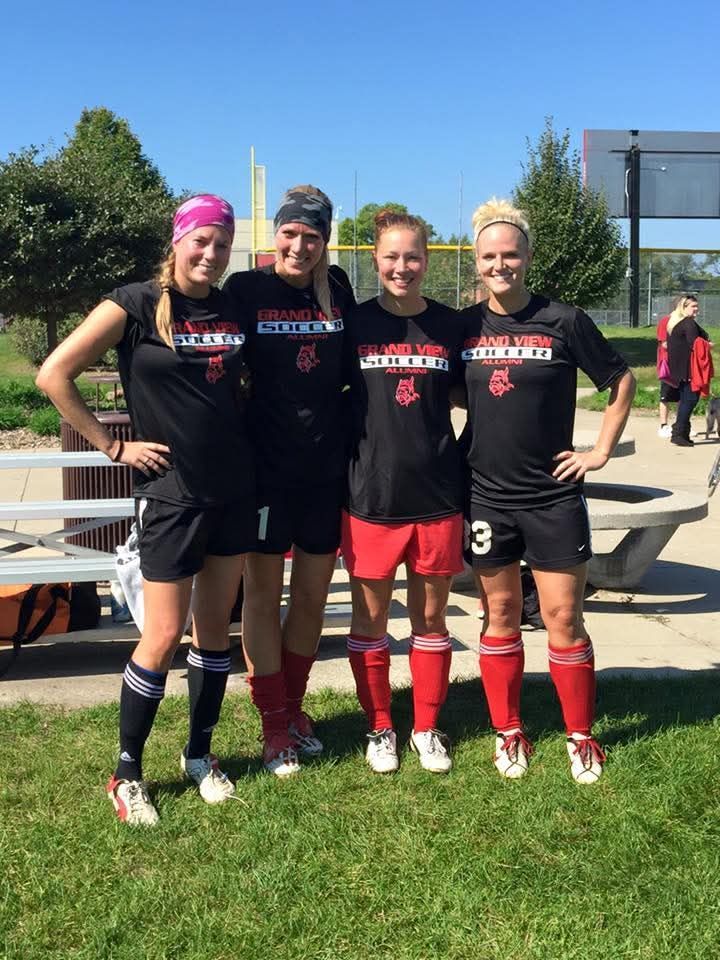
My diploma says Grand View College. It is a small distinction I have come to appreciate—and am proud of. I graduated just before the institution became Grand View University. Today, I have the honor of serving my alma mater.
My diploma reminds me that institutions change, and Grand View certainly has. When Danish immigrants founded Grand View College in Des Moines, Iowa, in 1896, they could not have imagined the university we know today. What began as an academy and seminary became a junior college, then a four-year college, and eventually a university offering master’s degrees. The academic programs, buildings, extra curriculars, clubs, and students themselves have changed. And yet, 130 years later, the seeds those founders planted now flourishes.
I am not Danish. I did not grow up speaking the language or immersed in Danish-American traditions. In fact, when I arrived at Grand View as a first-generation college student, I knew very little about the heritage of the college I had chosen. I wanted to remain close to home, to pursue an education and have the opportunity to play collegiate soccer. But what I found was something more. I found faculty who challenged how I thought. Coaches and teammates who taught me about discipline, belonging and responsibility to others. People who encouraged me to lead and challenge the status quo. I found a close-knit community where relationships mattered.
Grand View prepared me for work, for sure. But it also helped prepare me for life. Only much later did I understand that what I experienced as a student was connected to Grand View's Danish and Grundtvigian roots: lifelong learning, community, human relationships, and education for the whole person.
Perhaps that is what strikes me most about heritage. Sometimes we inherit its values before we know how to name it. Grand View historian and former Church and Life editor Thorvald Hansen captured this beautifully. He titled his book about history of Grand View's earliest years We Laid Foundation Here. For the college's centennial, he chose another phrase from its school anthem: That All Good Seed Strike Root. Foundation. Seed. Root.
Grand View’s President, Dr. Rachelle Keck recently reflected, “These are not words about keeping something exactly as it was. They are words about creating the conditions for something to grow.” That feels especially meaningful as Grand View celebrates its 130th anniversary and Church and Life publishes its final issue.
For me, preserving Danish heritage does not mean trying to recreate the world Grand View's founders knew. It means carrying forward what was best about what they gave us: community, curiosity, faith, lifelong learning, responsibility to one another, and the belief that education should develop the whole person for the whole of life.
I didn't know those words when I first walked onto Grand View's campus. I only knew that I had found a place where I belonged. Years later, I understand a little better what had been planted there—and what had taken root in me. Institutions may change. But good seed has a way of taking root. And what takes root can continue to grow.
A Christmas Memory
by Barbara Gardner
Many meaningful Danish traditions were passed down to me by my beloved Bedstefar and Bedstemor, Johan and Sigrid Johansen. Perhaps the one I recall most often and with deepest warmth in my heart is the Danish Christmas Eve tradition. As a child growing up in Tyler, Minnesota, a Danish community, naturally I thought everyone celebrated Christmas in this wondrous way. As my knowledge of the world expanded, gradually I realized how unique this tradition is in America, how fortunate I am to have had this experience year after year, and how extensively many Danish traditions and values have enriched my life. May my experience, described below, awaken your own cherished memories of Christmas Eve and other loved Danish traditions.
The first event of Christmas Eve was the special five o'clock service at Danebod Lutheran Church. I was always sad that Bedstemor couldn’t come with us to church, but she steadfastly remained home to finish cooking the Christmas feast. The rest of us—Bedstefar, Mother, Dad, my brother and I—would step from the warm house into the cold, crisp, dark Minnesota winter and drive to the Danebod Lutheran Church just five minutes away, not nearly enough time for the car to heat up and provide warmth for its bundled, huddled passengers.
The steepled white church stood faintly silhouetted as we parked and then walked to its sturdy wooden doors on a narrow path shoveled through knee-deep snow. When Bedstefar pushed open the massive doors, welcoming golden light streamed out. As we parted the next set of double doors, our focus sped to each side of the altar where two towering Christmas trees magnificently gleamed, both trees lighted by hundreds of softly glowing, twinkling white lights. Every light reflected off the tall stained glass windows lining each side of the church. Soon organ music filled the entire sanctuary with the familiar, festive melodies of Danish Christmas hymns. During the service, the congregation would sing these hymns, sometimes in Danish, most often in English, but always accompanied by the sonorous organ.. As a child, I loved the music, but squirmed through the sermon, only wanting to be done with the service, done with Christmas Eve dinner, done with the mounds of dishes, so that I could finally open my presents. However, in my early teen years I began to relish sitting in the pew, absorbing another pristine, simple, beautiful Christmas, nourishing my heart and soul with precious, once-a-year-only, sights and sounds.
No matter what age I was, when we returned to Bedstemor and Bedsefar’s after church, dinner was soon served on a specially set table with an ivory open-work lace table cloth and sparkling crystal glasses, small ones for a Danish drink made from raspberry juice. This drink accompanied the first course, risengrod, a delicious rice pudding served with butter and cinnamon sugar. Bedstemor always hid an almond in that steaming bowl of pudding. We all took a big helping of the risengrod, hoping to be the lucky person to discover the almond in our serving and thus receive a special gift. For some years when my brother and I were very young, surprisingly we both found an almond in our mouth-watering mound of risengrod and thus each received a special gift. Following the rice pudding, turkey was usually served because goose, the more traditional Scandinavian main course, became increasingly hard to find. Cooked red cabbage, mashed potatoes, gravy, stuffing, cranberry sauce and other side dishes that I don’t recall were included in this feast. My favorite Christmas dessert was kringle, a lighter-than-air, melt-in-your-mouth pastry cookie, shaped like a pretzel and purported to be very difficult to make. When the meal concluded, the dishes had to be washed before we could begin the final and most longed for Christmas Eve activity.
After what seemed to be a torturously endless wait, the dishes were done. Eagerly we descended the stairs to the basement where the Christmas tree beckoned with its delicate paper decorations, shimmering lights, and colorfully wrapped presents beneath its boughs, The overhead lights were always dimmed, creating focus on the twinkling tree. We encircled it, joined hands, felt the current of love and joy flow from each to the other, then began walking around the tree as our young and old voices rose in unison in one Christmas hymn after another after another. When seemingly all hymns had been sung, a very special song yet remained unsung, one that must be shared before anyone would even dare to consider opening a present. Slowly, softly someone would start singing “Nu ar det Jul igen” (“Christmas is here again”). As we sang the verses over and over, the volume increased, the words tumbled out faster and faster, our feet became swift, light, more joyful as we sped around the shining tree holding hands, singing, grateful for the shared tradition and for the genuine love and joy that bound us together at cherished Christmastime and throughout our lives.
Folk Life after Church and Life
by Lars Claussen
At Danebod Folk Meeting this year, I noticed a sense, which I shared with other participants. "I feel lighter here at Danebod," I said, "more free, more open, more spontaneous, more present, more connected." It was also here at Danebod this year that I learned Church and Life is coming to an end. And the feeling of this news is shock and sadness at the loss of the magazine that was always on my parents' reading table, all during my growing up. I could fill pages of memories in this reflection, but something else has come to mind.
There is THE THING, and then
there is WHERE THE THING POINTS US.
Jesus was the thing,
the person,
and also what he pointed us towards.
Same with Luther,
and with Grundtvig.
The persons,
and what they pointed to.
Now Church and Life is passing
as a thing, as a publication.
What, though, does Church and Life
continue to point us towards?
What does our Grundtvigian tradition.
our Lutheran tradition,
our Christian tradition,
our experience of being HUMAN,
point us towards?
I believe the circumstances of my life have made me a better human being. Growing up in the Danish Lutheran Church in Los Angeles, with Pastor Vagn Duus as my confirming pastor, and with Solvang nearby; Grundtvig’s influence was always close. Such a blessing.
Now, as the years continue building from when our ancestors lived in Denmark, and from those who emigrated in generations past, the question arises:
How do these circumstances,
encourage my human being
to forge a better humanity?
AM I LIVING MY TRADITION?
Human First, Then Christian,
By Grace Alone,
Love Neighbor as Self,
Faith, Hope, and Love.
Church and Life now makes its final issue. This experience will soon be no more. Every moment removes us further away from every previous experience, with one exception perhaps - that which we make our own is always with us. That which we internalize becomes who we are. That which we are is that which we create. I experienced these truths so beautifully this year at Danebod Folk Meeting, and I feel lighter, freer, more open, more spontaneous, more present, more connected.
Thank you, Church and Life, thank you to all of this tradition which has offered us such rich gifts for our living. The journey continues and the desire continues, to make these gifts where we live and how we live in this world. The experiences of life will continue unfolding. Thank you for the gift of seeing them through the eyes of "Human First, then Christian." Thank you to all who have put a lightness in my step, a song in my life, and a gratitude for medisterpolser.
Love and blessings to you, my dear friends!
Lars Claussen
Postscript
by Brad Busbee
While preparing for this, this final issue of Church and Life, I received an email from Ivan Westergaard who acknowledged the impact that the “Happy Dane” experience has had over his 92 years of life. Mr. Westergaard reported that he was first exposed to Grundtvig and his impact on Danish Lutheranism while attending Grand View Seminary in 1956-59, when Axel Kildegaard was Dean. In his email, Mr. Westergaard told me that among the many printed issues of Church and Life stacked in his garage, one article in particular stands out for him. It was by Phil Hefner and appeared in the April 2021 issue. The article, titled “A Letter of Axel Kildegaard,” was written many years earlier in preparation for his friend’s funeral. But its message remains poignant for Mr. Westegaard and, I expect, for readers of Church and Life. In the article, Hefner remembers Grundtvig’s famous words, “Human first, then Christian,” and he offers his own explanation of them: When you die, “you aren’t going away to heaven, because you have already been living in heaven, living your life in the community God gave you, beginning with your family first, and then God's heaven. . . Playfulness and ecstasy are required. . . it is necessary indeed to be children in order to be in the kingdom God has created."
Through the years, the pages of Church and Life have exemplified Grundtvig’s insistence that our human lives are a gift that we should be grateful for every day, here and now. The current title of the publication is itself an indication that the church body out of which the publication grew was not only concerned with but also celebration this earthly life.
I am grateful to have taken part of the American "Happy Dane" experience, alongside the seven previous full-time editors: Holger Strandskov, Paul Wikman, Michael Mikkelsen, Johannes Knudsen, Thorvald Hansen, Joy Ibsen, and Bridget Lois Jensen. I have spent many hours reading the issues previous editors poured their hearts into, learning from and about them and their communities. (And I would encourage readers to visit the archives for Kirke og Folk / Church and Life. Here is the link: Church and Life Archive Archive.) I am grateful, too, for the five student editors (Maddie Benton, Reagan Gage, Avery Means, Madison Morrison, and Ana Wright) who helped me transition the publication to an online format and to the approximately fifty-five authors who contributed to the ten issues (and 93 articles) of Church and Life published since February of 2025.
The final page of a publication is not the final chapter of its story. For nearly seventy-five years, Kirke og Folk / Church and Life has chronicled communities gathered around faith, learning, song, service, and fellowship, preserving countless glimpses of what Phil Hefner described as the heaven God gives us here and now. The magazine now reaches its conclusion but, as Lars Claussen points out, the life it celebrated continues in congregations, classrooms, homes, and friendships wherever people embrace the conviction that life itself is God's good gift.
I add this final issue to a rich archive, thriving tradition created by generations of editors, writers, and readers who believed that faith is something to be happily lived and ardently professed. Their voices now join a larger conversation that stretches across decades and continents. With gratitude for all who have sustained this publication since 1952, I lay down the pen, set aside the keyboard, and entrust the story to those who will continue living it in new ways and new places. Thanks be to God for the fellowship, the conversation, the song, and the hope.